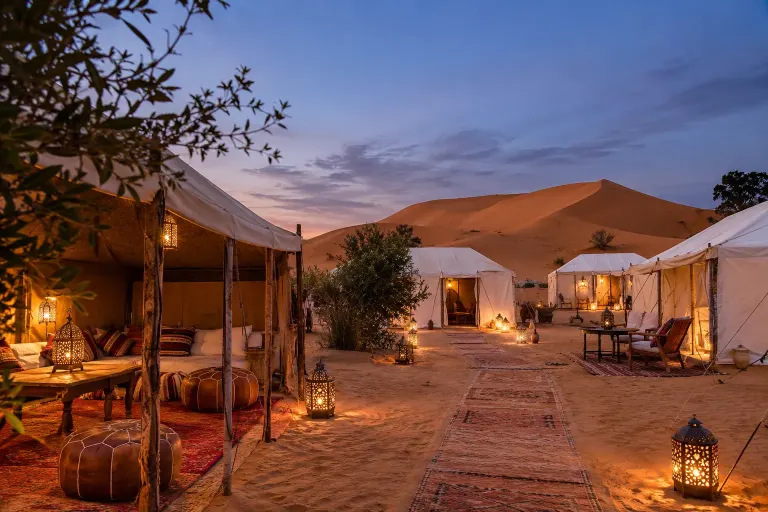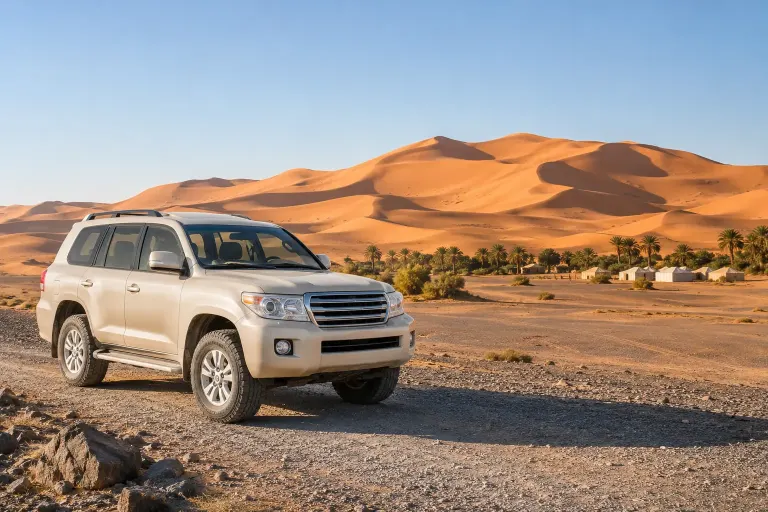
Morocco’s Sahara is one of the most remarkable natural places in the world – and much more complex and fascinating than most travellers think. Beyond the beauty of the Erg Chebbi dunes, the desert hides an amazing scientific, cultural and historical story. Here are 10 facts that will help you see the desert in a new way on your Morocco tour.
10 surprising facts about the Moroccan Sahara
1. The Sahara is growing
The Sahara has grown by about 10% over the last century, mainly because of climate change and desertification along its southern edge in the Sahel. In Morocco the edge of the desert is slowly moving north – but over decades and centuries, not years.
2. The Erg Chebbi dunes move every day
The dunes at Merzouga are never still – the wind reshapes them all the time. They slowly move in the direction of the main wind, and every sandstorm changes their shape. The dune you photograph at sunset may look completely different the next morning.
3. The Sahara used to be green
Between 5,000 and 11,000 years ago the Sahara was a green savanna, home to hippos, crocodiles, elephants and thriving human communities. Rock art across the Sahara shows these animals. Changes in the climate slowly dried out the “Green Sahara” over thousands of years.
4. Only about a quarter of the Sahara is sand
The famous dunes cover only a small part of the Sahara. Most of the desert is rocky plateau (hamada and reg) and gravel plains. Erg Chebbi and Erg Chegaga in Morocco are precious seas of sand in a desert that is mostly stone.
5. Huge temperature differences
The same place at Erg Chebbi can reach 48°C at midday in August and fall below 0°C on a January night – one of the widest temperature ranges of any environment on earth.
6–10: more amazing facts
- 6. The Sahara receives so much sunshine that, in theory, it could power Europe many times over
- 7. The Merzouga area is known for meteorites, and local people regularly find stones that came from space
- 8. The Erg Chebbi dunes can create their own small weather events, such as dust devils and local dust storms
- 9. Desert nights are not silent – wind, moving sand and changing temperatures make a constant natural soundtrack
- 10. The ancestors of the Berber people have crossed the Sahara for thousands of years, finding their way by the stars
Come and see the Sahara for yourself on one of our tours. See our departures from Marrakech, departures from Fes or all our tours. National Geographic – Sahara Desert and the official Morocco tourism website have more scientific and geographical background.